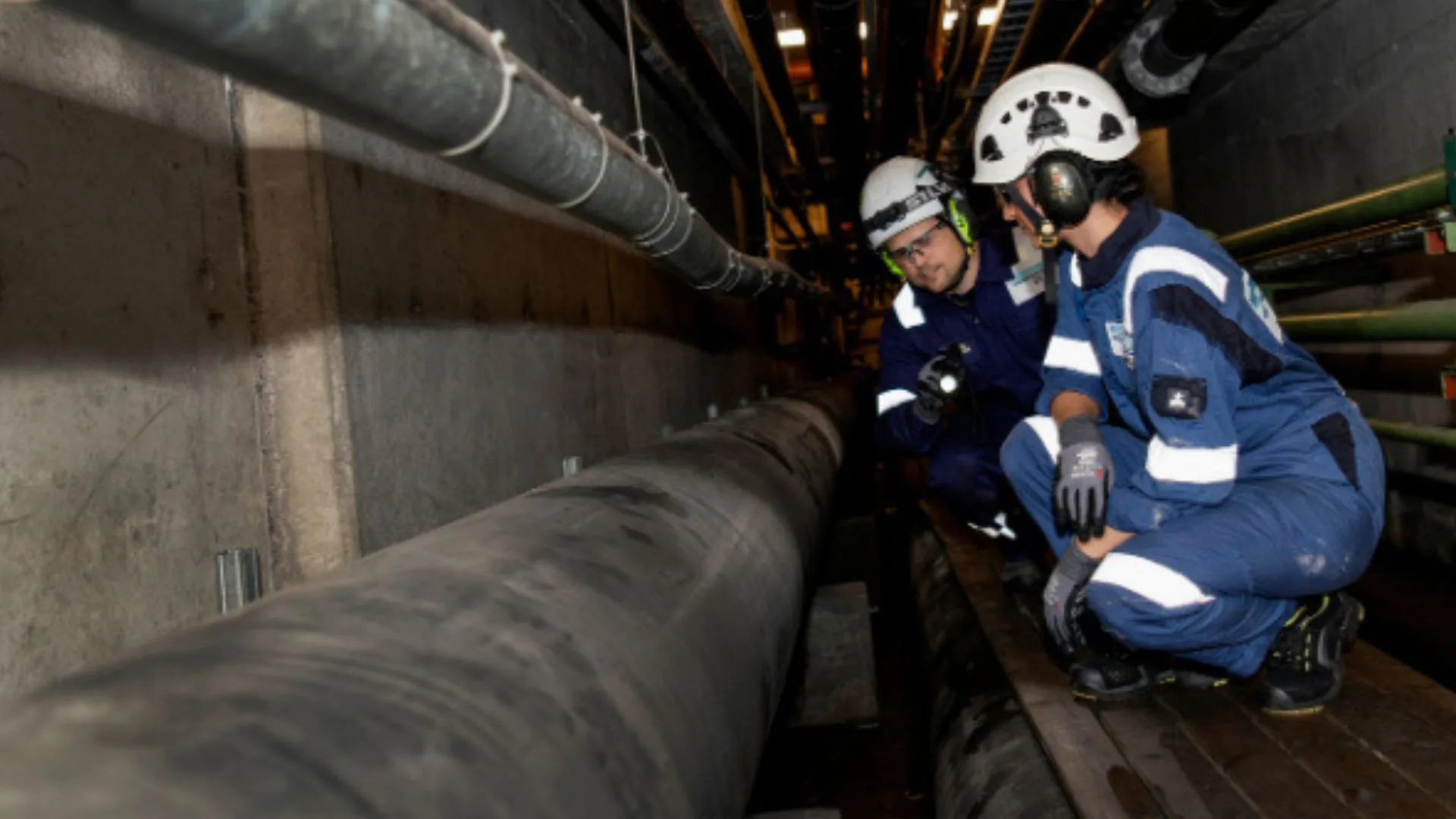
The International Maritime Organization (IMO) updated its recommendations for entering confined spaces on board ships, a decision that once again puts the spotlight on one of the most persistent risks in maritime safety. The measure, adopted through Resolution MSC.581(110), reinforces the need to review the safety management system and to apply more rigorous controls before any entry into these spaces.
According to the regulatory note issued by DNV on April 8, the problem remains linked to repeated failures in hazard identification, risk assessment, and the implementation of appropriate entry procedures. This is compounded by the structural complexity of certain compartments on board, where ventilation, lighting, and circulation may be insufficient to work safely.
An operational risk that continues to claim lives
In practice, access to confined spaces remains one of the most delicate operations for seafarers. These environments may present atmospheres that are not life-sustaining due to oxygen deficiency or excess, as well as the presence of toxic or flammable gases.
According to industry background information, accident investigations show a consistent pattern: rushed decisions, incomplete checks, and insufficient preparation before entry. In 2025, InterManager estimated that around 350 seafarers and subcontracted workers have died from asphyxiation in enclosed spaces on board ships since 1996. It also noted that 43 accidents occurring since 2022 accounted for 70 of those deaths.
What changes with the IMO’s revised recommendations?
The IMO-driven update sets out a more structured safety strategy. One of the central points is that each company, in consultation with the crew, must adopt a comprehensive approach to prevent accidents during entry into confined spaces.
Among the most relevant changes is the creation of a Confined Spaces Register specific to each ship. That register must identify the spaces considered high-risk, the associated hazards, the variable conditions that may arise, and the mitigation measures that must be applied before authorizing entry.
In addition, the recommendations reinforce the need for training on the maintenance, calibration, and correct use of atmospheric testing equipment. The revision also incorporates new guidance on gas levels and portable detectors, while making it clear that any additional measures must be defined based on a risk assessment linked to the type of cargo carried and the applicable regulatory framework.
The SMS moves to the center of management
Given its operational scope, the IMO update requires a renewed focus on ships’ safety management systems. DNV emphasizes that entry into confined spaces must be treated as a key operation for personnel safety, not as a routine task.
This entails reviewing procedures, ensuring equipment availability, allocating sufficient time to plan each entry, and bringing this topic into internal audits, management reviews, and the master’s checks. Organizational leadership, both on board and ashore, also carries greater weight, as the effectiveness of the measures depends on the commitment, competence, and attitude of decision-makers.
What does DNV recommend to shipowners and operators?
In line with the new circular, DNV recommends that its clients use Resolution MSC.581(110) as the basis for updating their safety management systems. The company considers it a priority for ships to have clear information, appropriate equipment, and sufficient training to implement the required safeguards.
In addition, the risk assessment must consider the nature of the cargo and the associated regulations, including Safety Data Sheets and international codes such as IMDG, IMSBC, IBC, and IGC, as applicable. The goal is to reduce personnel exposure to hazardous atmospheres and improve emergency response capability on board.
In this context, the IMO review sends a clear signal to shipowners and operators: confined space safety requires planning, operational discipline, and far more detailed preventive management than has been applied to date.
Source and photo: DNV