Table of Contents
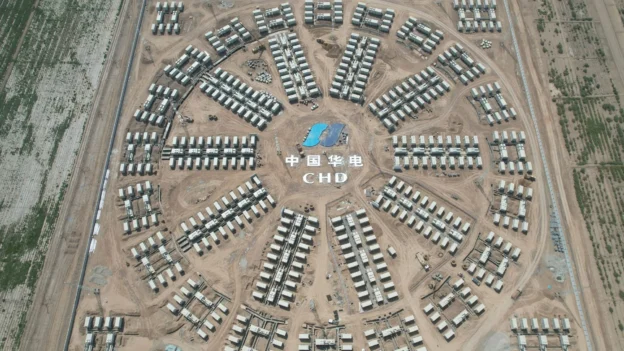
On July 19, the 500 MW / 2 GWh independent energy storage project in Huadian Xinjiang Kashgar was officially connected to the grid. The work was carried out by the 16th Power China Hydropower Bureau, reinforcing the country’s commitment to the transition to a more reliable and sustainable electricity system.
China’s largest energy storage project
Located 41 kilometers east of Kashgar, Xinjiang, this facility occupies 119,000m2 and required an investment of close to 1.6 billion yuan. It is the first stage of a development that will eventually reach 1 GW / 4 GWh.
The system is characterized by a hybrid solution: 50% grid-forming and 50% grid-following inverter systems, connected to the 750 kV Kashgar substation via a 220 kV transmission line.
The project also adopts LFP (lithium iron phosphate) batteries (lithium iron phosphate) batteries, distributed in 100 electrical storage units designed to optimize grid backup and guarantee supply reliability in the region.
During low load periods, the system will accumulate up to 570 million kWh, while during peak hours it will provide 520 million kWh, reducing energy waste from 7.64 million kW of installed solar capacity in Kashgar by 5.33% per year.
Follow us on social networks and don’t miss any of our publications!
YouTube LinkedIn Facebook Instagram X (Twitter) TikTok
Source and photo: Power China