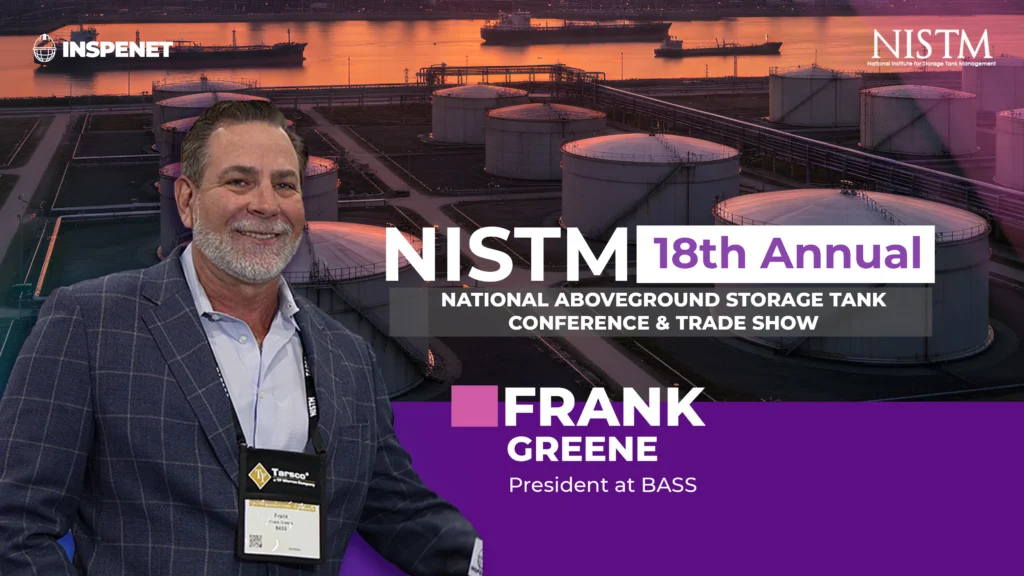
During the NISTM 2025 event, Frank Greene, president of BASS Corrosion Services, addressed the main technical and operational challenges faced by a company dedicated to cathodic protection. With more than 50 years of experience, BASS has positioned itself as a key player in the protection of storage tanks and pipelines within the energy and industrial sectors.
From its offices in Texas, Georgia, Oklahoma, and Michigan, to projects spanning virtually the entire eastern Rocky Mountains, the company has managed to maintain its operational identity with its own equipment and trained personnel, without relying on subcontractors, but its true difference goes beyond the technical.
BASS was founded in 1967 as a local drilling company. Over the years, it has evolved into a complete provider of engineering solutions for critical infrastructure, with a specialized focus on corrosion on the ground side of above-ground storage tanks. In 2020, the company was acquired by ONEMESA, expanding its reach and technological resources.
The company has more than 100 employees and offices in Longview, Fort Worth, Midland, Tulsa, South Georgia, and Michigan. This geographic coverage allows it to mobilize equipment quickly and cost-effectively, which is key in industrial projects with limited time frames.
One of BASS's technical pillars is its deep anode systems, designed to maximize electrical current distribution and protect buried metal structures from corrosion. These boreholes, which reach depths of between 100 and 500 feet, allow the current to flow efficiently to the exposed steel.
In contexts such as tank farms, the installation is carried out directly under the bottoms of the tanks, bringing the anodes closer to the steel to be protected. This proximity optimizes the effectiveness of the system, significantly reducing the risk of long-term structural failure.
Before determining which solution to apply, the BASS team conducts cathodic protection surveys, measuring electrical potentials between the ground and metal structures. This data reveals whether an installation is receiving adequate current and whether the current system is fulfilling its function.
If deficiencies are detected, the team proposes specific solutions that may include the installation of new anodes, improvements in wiring, or adjustments to the current design. The objective is clear: to prevent leaks or failures that compromise the environment and the integrity of the facilities.
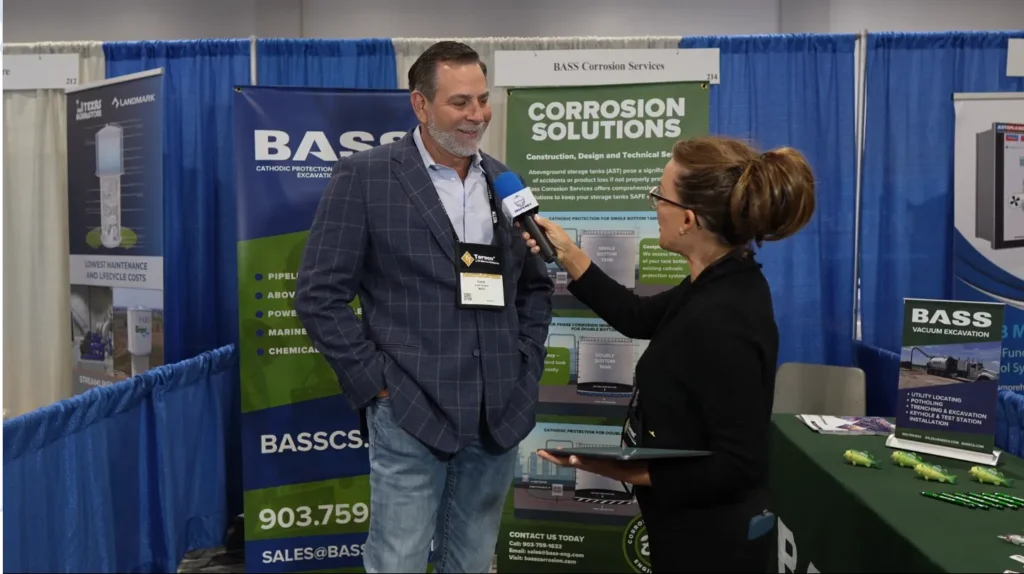
Although technology and technical knowledge are essential, Frank Greene was emphatic in pointing out that BASS's greatest challenge is not underground, but on the human level.
"It's hard to find people willing to travel for weeks, work under demanding conditions, and be away from their families,"
Greene explained.
That is why BASS places a strong emphasis on the well-being of its team. Despite having more than a hundred employees, the company seeks to maintain a culture of closeness, where safety is not a procedure, but a philosophy.
"The first thing is to take care of our people,"
Greene affirmed.
This commitment is reflected in training programs, strict protocols on site, and a work environment focused on respect and emotional stability.
BASS has its own equipment, including drills and vacuum trucks, which allows them to have total control over project schedules and reduce downtime due to external failures. In addition, they have the technical capacity to drill under existing tanks, which is a great advantage for customers who cannot stop operations.
In terms of technology, the company has incorporated digital tools for design and data collection, improving the accuracy of system installation and performance monitoring over time.
With a combination of experience, technology, and a human approach, BASS Corrosion Services positions itself as a strategic partner for companies that need to protect critical metal assets. Its ability to adapt to each context, together with its commitment to safety and quality, reinforce its leadership in the field of cathodic protection.
For more content on NISTM 2025, visit our LinkedIn profile.
Source: Inspenet.