
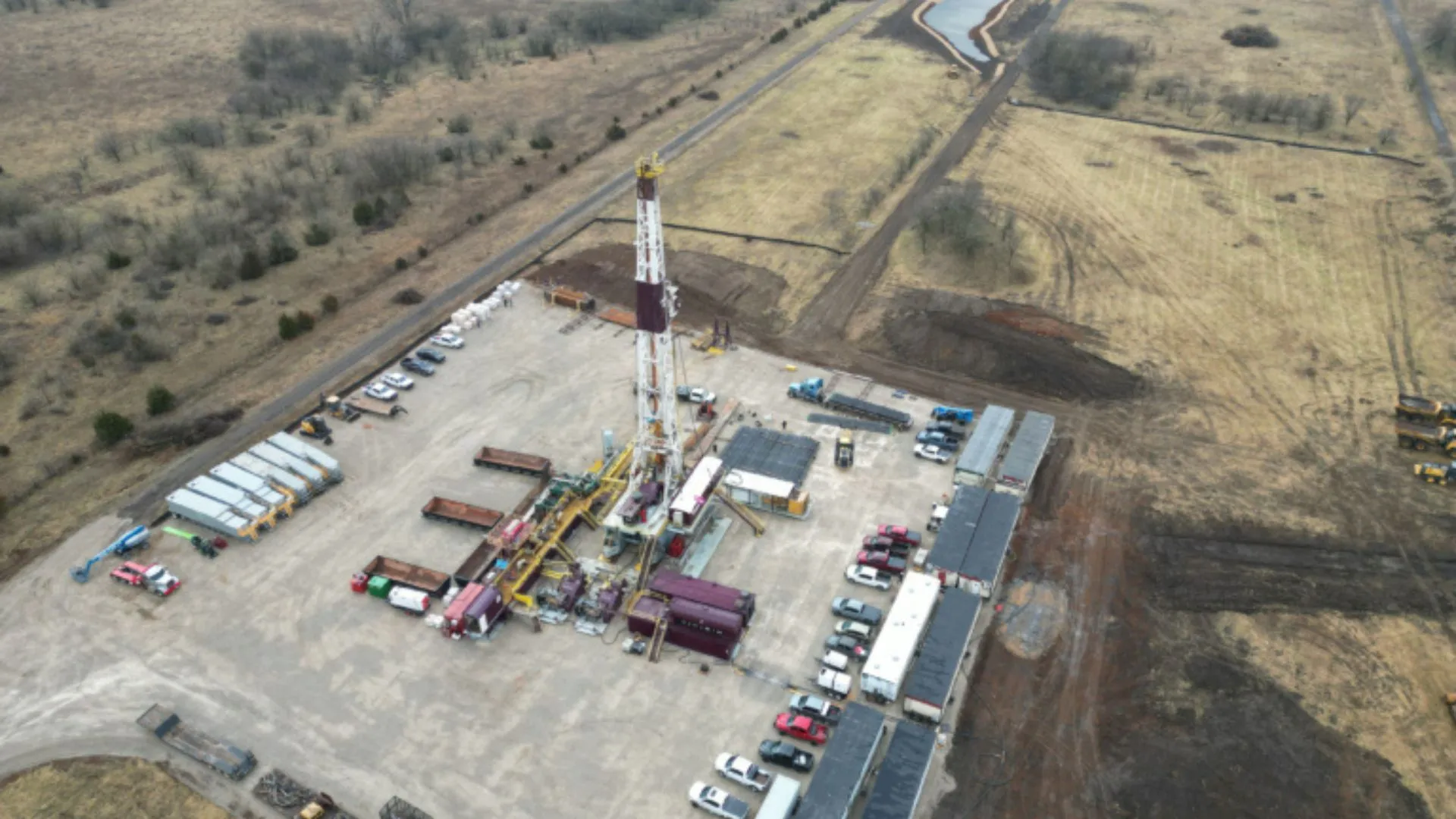
Deep Fission announced the start of drilling for its first data acquisition borehole in Parsons, Kansas. This action paves the way for the development of the world’s first underground modular pressurized water reactor, installed at a depth of one mile underground.
The borehole, which will reach 6,000 feet deep and have an eight-inch diameter, is the first in a series of three planned for this initial phase of the project. Its primary function will be the collection of geological, thermal, and hydrological data, essential for engineering design, safety analysis, and regulatory planning.
Nuclear technology with roots in the subsurface
Deep Fission’s approach combines proven and emerging technologies. Its “Gravity” reactor integrates pressurized water reactor (PWR) components with drilling methods developed in the oil and gas industry, as well as geothermal heat transfer techniques. This innovative model is designed to be installed within sealed boreholes, where the bedrock provides a naturally stable environment for containment.
Each unit will be able to generate up to 15 MWe. Its compact size and the possibility of burying multiple reactors at the same site will allow for easy scaling of power generation, minimizing the land footprint compared to conventional nuclear plants.
Institutional support and new regulation
The Deep Fission project is supported by the U.S. Department of Energy (DOE), as part of the Reactor Pilot Program, authorized under Executive Order 14301. This initiative represents a strategic shift in federal energy policy, as it allows for the installation and testing of reactors on land outside of national laboratories, opening new pathways for the commercial implementation of nuclear technologies.
Deep Fission’s participation in this program underscores institutional confidence in its technological model, which promises to accelerate access to safe, lower-cost, low-carbon energy.
From Kansas to the world
The main objective of the project is to build a commercial underground reactor plant following the technical validation of the design. According to Deep Fission, the information obtained from these three boreholes will be crucial to moving toward that goal.
Founded in 2023 by father-daughter duo Rich and Liz Muller, the company continues to position itself as a benchmark in energy innovation by integrating applied science, precision engineering, and a new way of understanding nuclear generation.
Source: Deep Fission