
The Woodfibre LNG project continues to advance at a good pace after reaching 65% construction, driven by the arrival of two main modules in just one week. This operational milestone reinforces the project’s positioning as one of the most relevant initiatives in the development of liquefied natural gas in Canada.
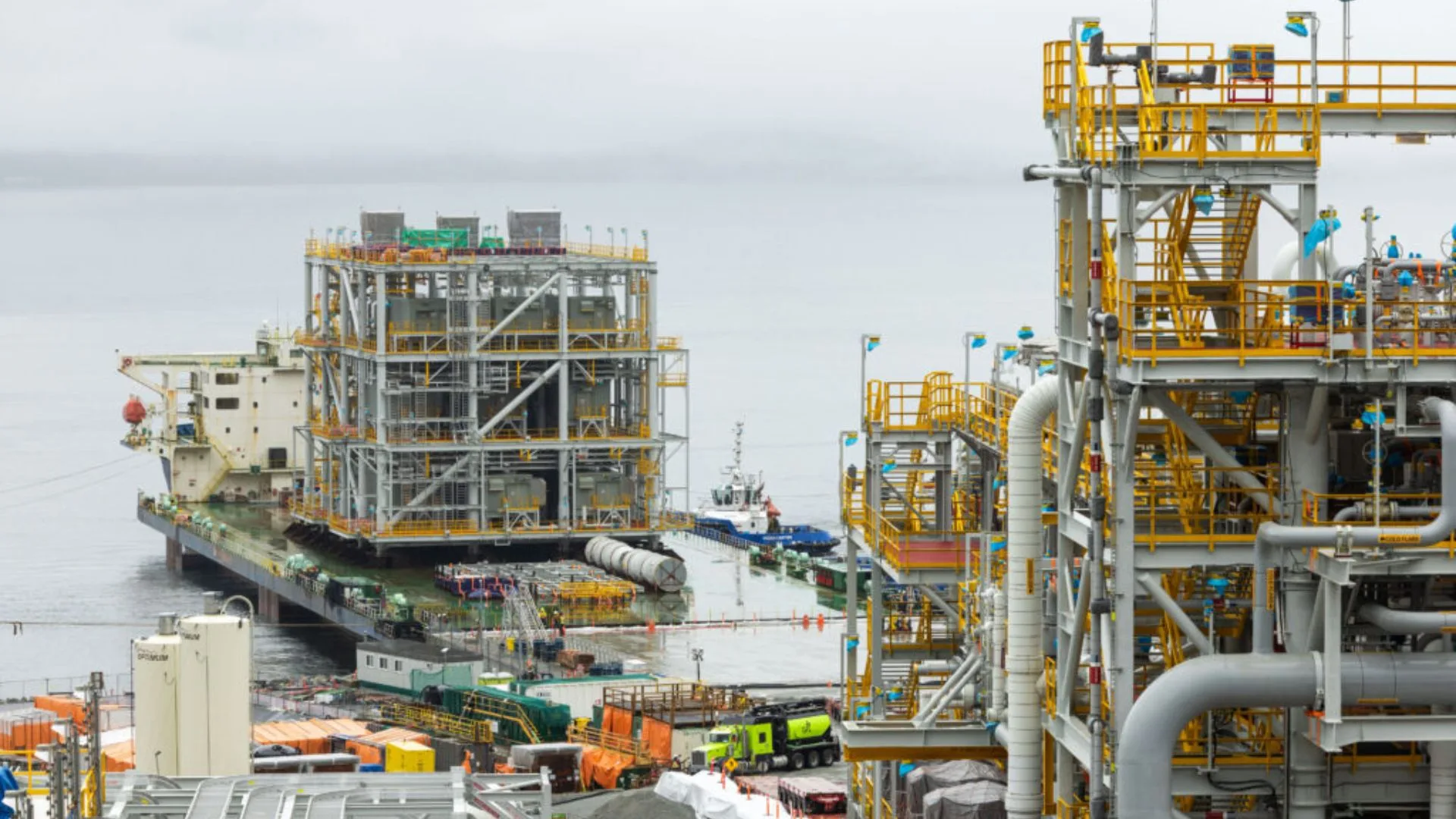
Specifically, the facility recently received its power module, the sixteenth delivered to date, consolidating the progress of the plant located in Squamish, British Columbia.
A key module for electric operation
With a weight exceeding 4,200 metric tons, the power module will play a central role in the facility’s operation. Unlike conventional systems, this module will not generate electricity, but will instead act as the core for energy control and distribution.
Likewise, the system will receive electricity supplied by BC Hydro, allowing for the efficient management of the energy required by the compressors, which are fundamental in the natural gas liquefaction process.
This technical approach marks a significant difference compared to other LNG plants, as it eliminates the need for internal generation based on fossil fuels.
The first electric LNG plant in Canada
The Woodfibre LNG project is shaping up to be the country’s first fully electric LNG plant and one of the first globally designed to operate with net-zero emissions.
As explained by Luke Schauerte, the company’s executive director, the power module is essential to guarantee the energy supply and distribution of the electric liquefaction process, a feature that distinguishes the facility within the North American market.
Furthermore, the use of renewable electricity positions the project within the energy sector’s decarbonization strategies.
Impact on the global energy market
As the demand for reliable, lower-emission energy increases, initiatives like Woodfibre LNG reinforce Canada’s role as a strategic supplier in the international market.
The plant will have a production capacity of approximately 2.1 million tonnes of LNG per year for export, contributing to the energy security of its trading partners.
Likewise, the project stands out for its governance model, incorporating the Squamish Nation as an environmental regulator, a precedent in Canadian industrial development.
Logistics and next steps
The module arrived aboard the heavy-lift vessel Dongbang Giant 8. Following its arrival, technical inspections were carried out and unloading operations began using self-propelled modular transporters.
With this progress, Woodfibre LNG continues to move closer to its goal of starting operations in 2027, consolidating itself as a benchmark in the evolution of LNG toward more sustainable energy models.
Source and photo: Woodfibre LNG