
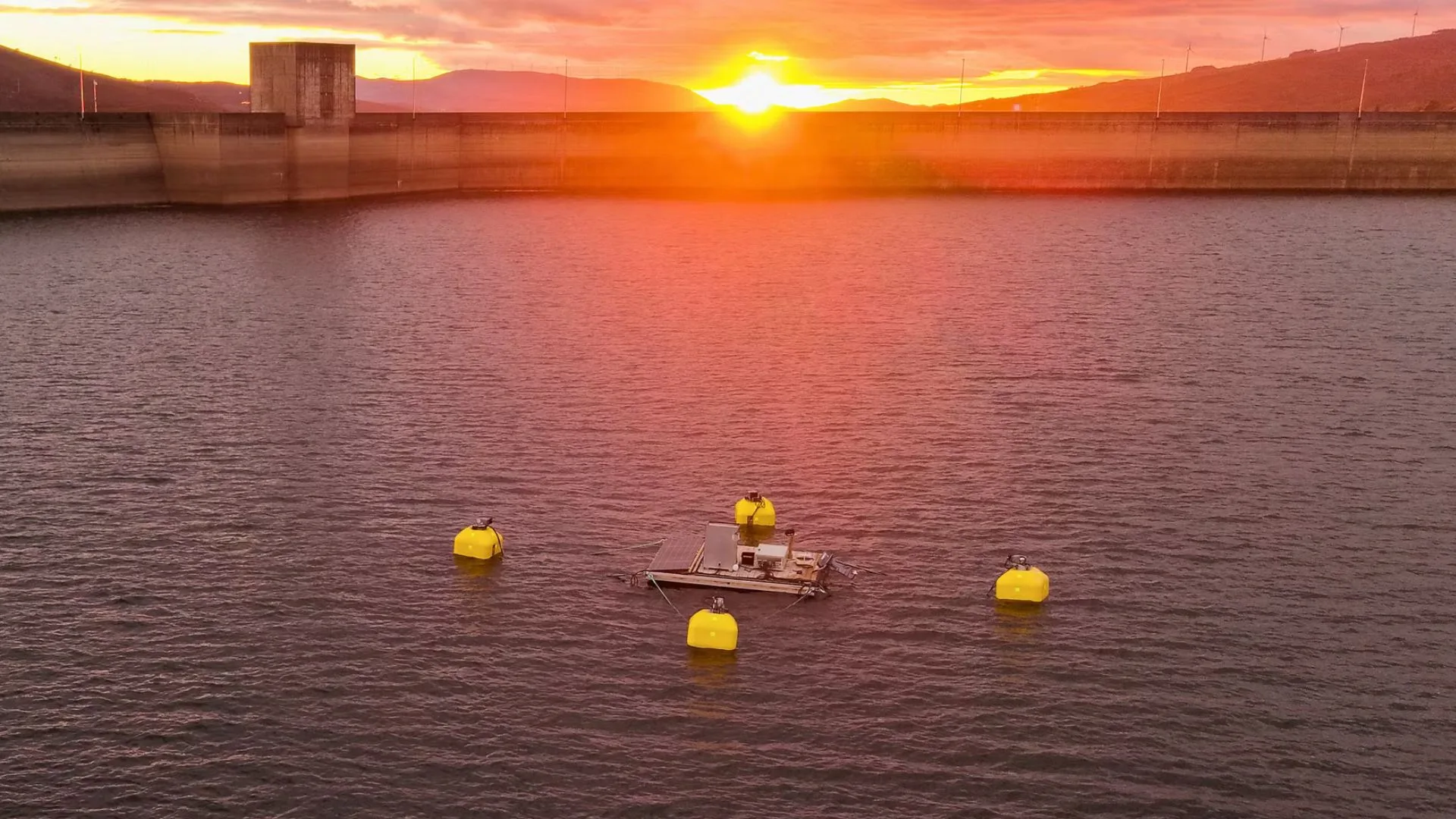
Fred. Olsen 1848 has completed the pilot installation of its tension buoy system at the EDP Floating PV Lab, consolidating advances in floating solar energy and hybrid hydroelectric systems.
Tension Buoy Technology for Floating Solar Systems
First, the project was developed at EDP’s floating photovoltaic laboratory in Portugal, considered the first open-access facility in Europe for testing solar generation technologies and hydroelectric systems.
This environment presents demanding conditions, with water level variations of up to 50 meters, making it an ideal scenario for validating adaptive mooring solutions in floating photovoltaic systems.
Adaptive Mooring Technology for Greater Stability
On the other hand, the Tension Buoy technology has been designed to ensure structural stability and performance of floating solar installations against extreme water level fluctuations.
Unlike conventional systems, this self-adjusting mechanism allows its implementation in reservoirs and dams without significant restrictions related to bathymetry or water variation range.
Likewise, this capability opens new opportunities to deploy floating energy infrastructure in locations previously considered unfeasible.
Advances Toward Hydroelectric Hybridization
In this context, the system validation enables progress in integrating floating solar energy with existing hydroelectric plants.
According to Even Hjetland, Principal Development Engineer at Fred. Olsen 1848, testing under real conditions contributes to developing more adaptable and resilient energy systems, especially in scenarios of water variability.
In this way, solar energy can complement hydroelectric generation during periods of high radiation or drought, improving operational flexibility.
Rapid Implementation and Industrial Collaboration
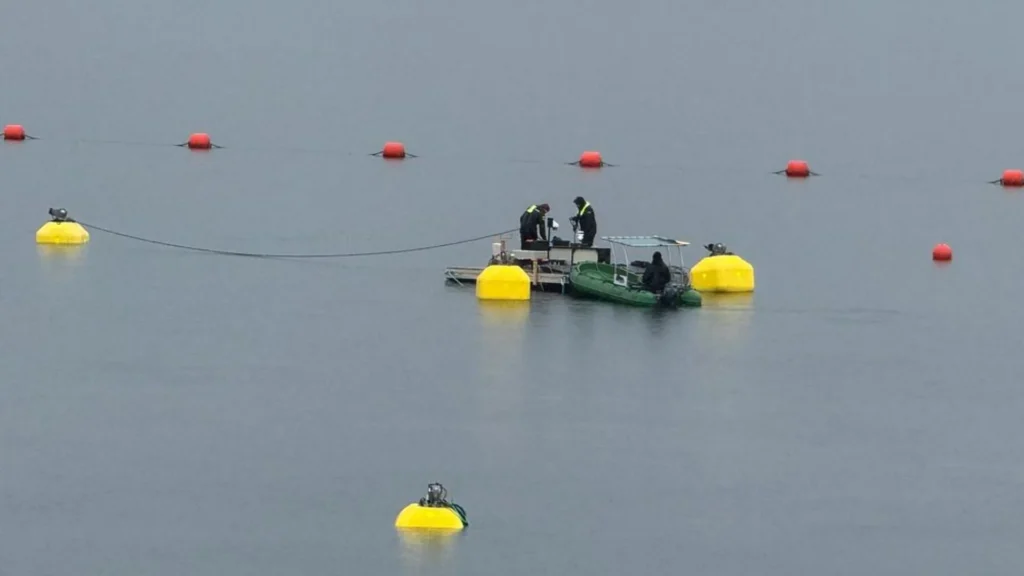
Additionally, the installation of the four automatic units was completed in just five days, demonstrating the system’s efficiency.
The project was executed in collaboration with EDP, Sperra, and local partners, also integrating a 3D-printed gravity anchor developed by Sperra, which was tested under extreme conditions.
Monitoring and Future Outlook
Finally, the installation will remain operational for one year as a live demonstrator, allowing data collection on performance, reliability, and maintenance.
With this initiative, EDP strengthens its positioning as an innovation platform in renewable energy, while Fred. Olsen 1848 advances in the commercialization of solutions for hybrid energy systems.
Overall, tension buoy technology is emerging as a key element for expanding the use of reservoirs in clean energy generation, driving the transition toward more efficient and sustainable models.
Source and photo: Fred. Olsen 1848