
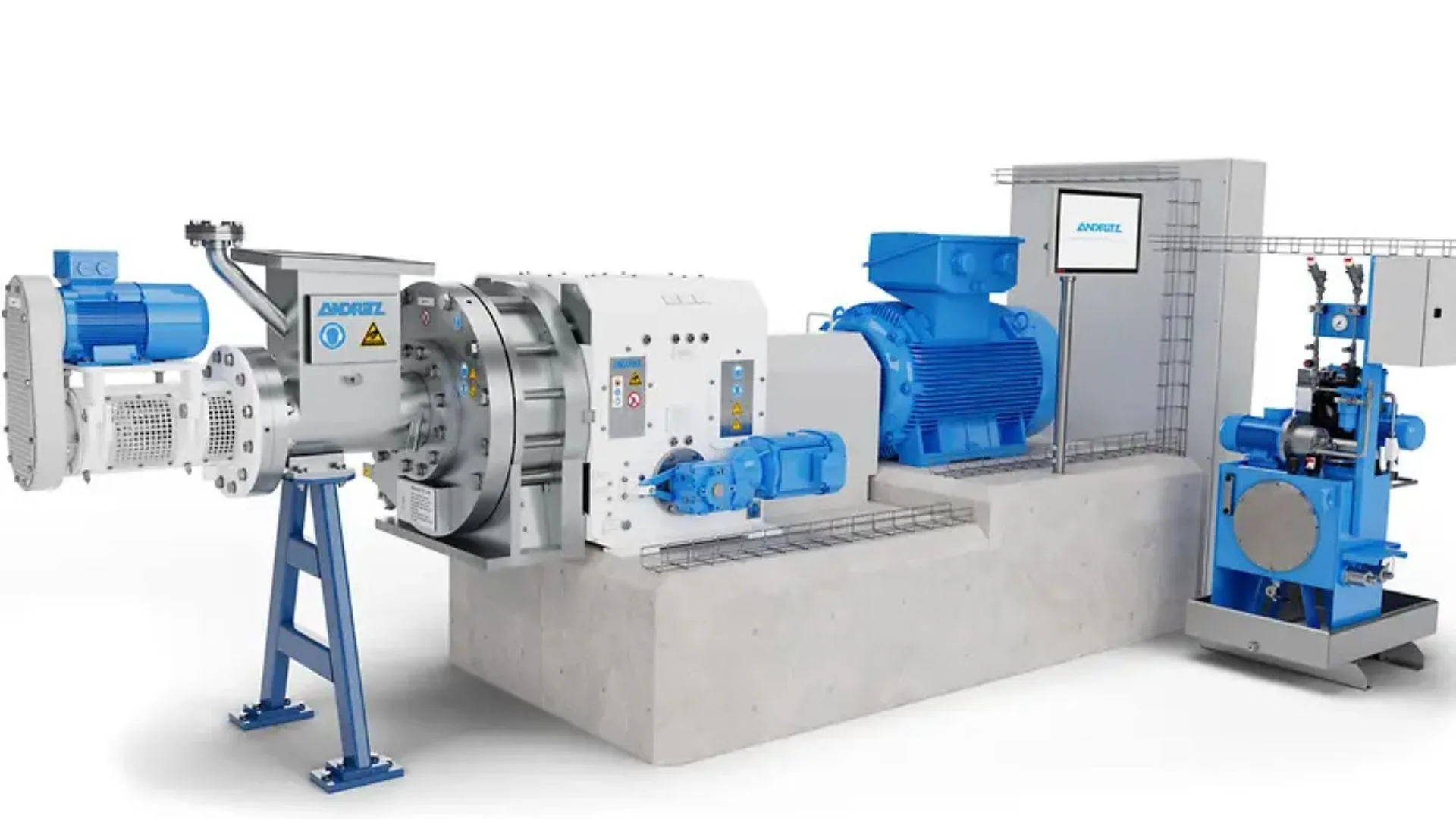
SAFFiRE Renewables, a subsidiary of Conestoga Energy, has selected technology company ANDRITZ to supply the refining equipment that will enable operation of its new cellulosic ethanol pilot plant in Liberal, Kansas. The project is expected to start in the first quarter of 2027 and is a significant step forward in advancing low-carbon fuel production from agricultural residues such as corn stover.
Project development
ANDRITZ’s scope of supply includes two state-of-the-art refiners: a high-consistency single-disc refiner and a low-consistency CompaDis™ CDI refiner. Both machines will have a processing capacity of 10 tons per day, playing an essential role in the mechanical pretreatment of biomass before it is converted into ethanol.
By supporting SAFFiRE in developing sustainable fuel production, we help accelerate the transition to low-carbon transportation. Our refining solutions provide a solid foundation for utilizing agricultural residues and scaling up next-generation fuel production.
Jacob Hyland, Director of Fiber Sales and Applications at ANDRITZ.
Ultra-low-emissions ethanol
The demonstration plant will use DMR (deacetylation and mechanical refining) pretreatment technology, developed to convert plant residues into cellulosic ethanol. This fuel can not only be integrated into existing markets, but also converted into SAF (sustainable aviation fuel), biomaterials, or biochemical products.
Marykate O’Brien, SAFFiRE’s Chief Technology Officer, explained that the goal is to leverage local, sustainable feedstocks to produce ethanol with a lifecycle that reduces greenhouse gas emissions by more than 100% compared with gasoline or traditional jet fuel.
Companies with a track record in biofuels
Conestoga Energy, SAFFiRE’s parent company, has annual production of more than 175 million gallons of ethanol and extensive experience in CO₂ capture and sequestration. Headquartered in Kansas, it is committed to developing bioenergy from crops such as corn and sorghum, as well as cellulosic biofuels under the U.S. Renewable Fuel Standard.
ANDRITZ, headquartered in Austria, has more than 170 years of industrial experience and operates in over 80 countries. Its Pulp & Paper division offers technology solutions that integrate automation, sustainability, and digitalization for global industries.
Applications in hard-to-decarbonize sectors
The cellulosic ethanol produced could be key to decarbonizing sectors such as heavy-duty, maritime, rail, and air transport—among the hardest to transition to clean energy. The initiative not only positions SAFFiRE and ANDRITZ at the technological forefront, but also reflects an industrial strategy aligned with global climate goals.
Source and photo: ANDRITZ