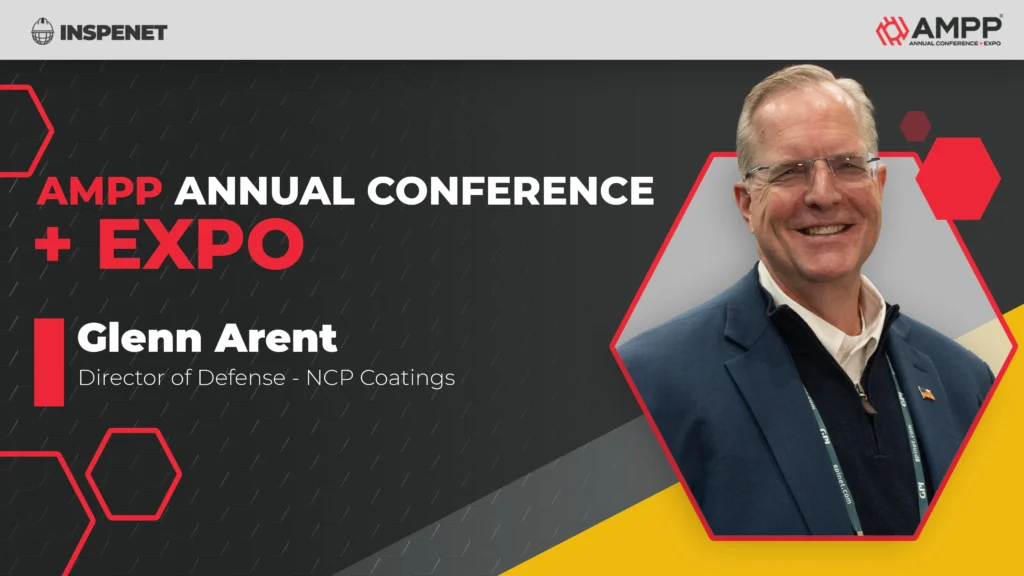
First, during the AMPP Annual Conference + Expo 2026, Glenn Arent, Director of Defense at NCP Coatings, shared how military experience is shaping the direction of industrial coatings. From his perspective, the sector is undergoing a technical evolution driven by new operational and regulatory demands that require rethinking formulations and complete systems.
In this context, Arent explained that the company maintains a clear focus on developing solutions capable of performing under extreme conditions. This approach is not limited to the military sphere; it also extends to industrial sectors where durability and protection are critical factors.
On the other hand, NCP Coatings’ history provides a solid foundation for this technological evolution. Founded in 1948 in Michigan, the company began in the automotive sector, developing paints for manufacturers such as Studebaker. Over time, that experience led to a specialization in defense coatings—an area in which it has built a strong presence for decades.
Likewise, the company has expanded into industrial applications, leveraging the know-how gained in high-demand environments. This dual presence—military and industrial—defines its market positioning today and enables it to adapt technologies between both sectors.
In this regard, one of the most relevant aspects is technology transfer between military and civilian applications. According to Arent, many of the systems used in defense have direct equivalents in heavy industry, especially when it comes to corrosion protection.
In this way, solutions such as zinc- or aluminum-rich coatings act as cathodic protection systems, essential both in military infrastructure and in sectors such as pipelines or steel structures. Added to this are high-solids epoxy systems used in storage tanks or environments where chemical resistance is critical.
In addition, topcoats play an important role in overall system performance. Technologies such as polysiloxanes or polyurethanes deliver high levels of resistance to UV radiation, abrasion, and chemical agents. These types of solutions, common in defense, transfer directly to industrial equipment, heavy machinery, and exposed structures.
Consequently, the development of industrial coatings benefits from knowledge accumulated in scenarios where failure is not an option, raising the technical standard in civilian applications.
However, performance is not limited to resistance; in many applications, coatings must meet additional functions that complicate their formulation. A clear example is ship decks, where a non-slip surface is required along with low solar absorption.
At this point, Arent highlighted the importance of selecting pigments that reduce thermal load. This capability helps lower the internal temperature of structures, a relevant factor both on vessels and in industrial facilities exposed to the sun.
At the same time, these systems must ensure effective protection on metal substrates, which requires a complete design that includes surface preparation, primer, and topcoat. This holistic view is key to ensuring coating durability.
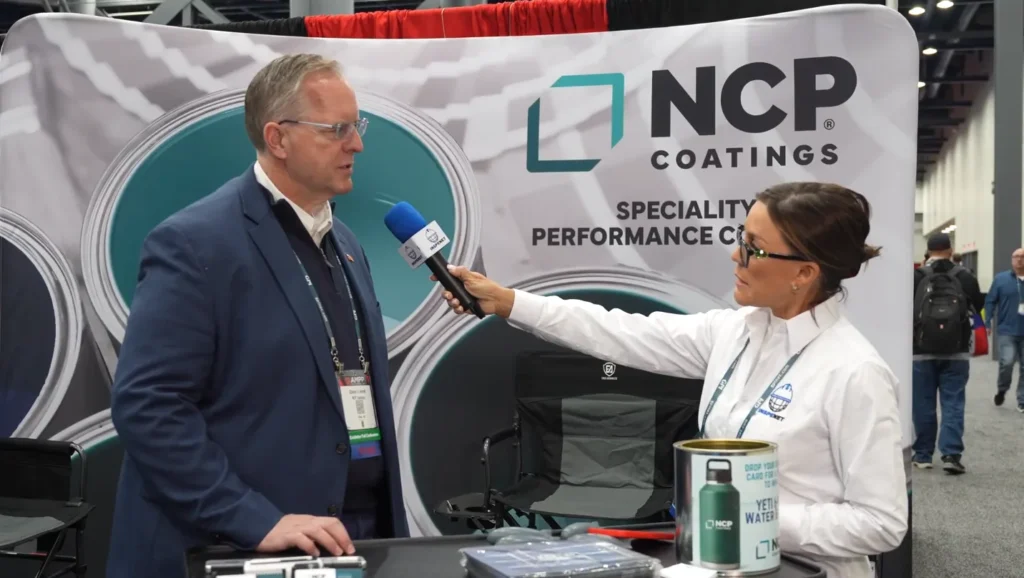
One of today’s biggest challenges in industrial coatings is related to safety and the impact of chemical components. Customers are demanding solutions that reduce risks for operators without compromising performance.
In this scenario, eliminating isocyanates has become a priority due to their occupational health implications. Likewise, there is growing interest in replacing certain solvents commonly used in the industry.
In addition, the aerospace sector continues to move forward in reducing chromate use, traditionally used for their effectiveness in protecting aluminum. However, maintenance and repainting processes have highlighted their impact, driving the search for alternatives.
Thus, innovation in industrial coatings is no longer driven solely by technical criteria, but also by increasingly strict regulatory and safety requirements.
As for markets, NCP Coatings has a balanced distribution between defense and industry. Approximately 60% of its activity is concentrated in the military sphere, including land, naval, and aerospace applications.
Within this segment, the naval environment stands out as the most significant, reflecting the complexity and demanding nature of these applications. On the other hand, the rest of the business is geared toward industrial sectors, where the company works with heavy equipment, specialized machinery, and metal fabrication.
In this way, the industrial coatings developed by the company are used in a wide variety of environments, from rock crushers to heavy-haul transport vehicles.
Finally, adaptability stands out as one of the company’s differentiators. According to Arent, the size of NCP Coatings enables it to move quickly and tailor solutions to each customer’s specific needs.
Likewise, its focus on research and development facilitates collaboration with other companies and entities in the sector. This dynamic supports joint projects and accelerates the introduction of new technologies to the market.
As a result, the combination of operational agility and technical capability strengthens its positioning in an increasingly competitive environment.
Ultimately, the evolution of industrial coatings is being shaped by the convergence of technical performance and new requirements in safety and formulation. The experience accumulated in the military sphere will continue to play a key role in this process, serving as a driver of innovation for industrial applications.
As regulations advance and market demands grow, the sector is moving toward solutions that are more efficient, safer, and better suited to increasingly complex environments.
For more content about AMPP 2026, please visit our LinkedIn profile.
Source: Inspenet.