
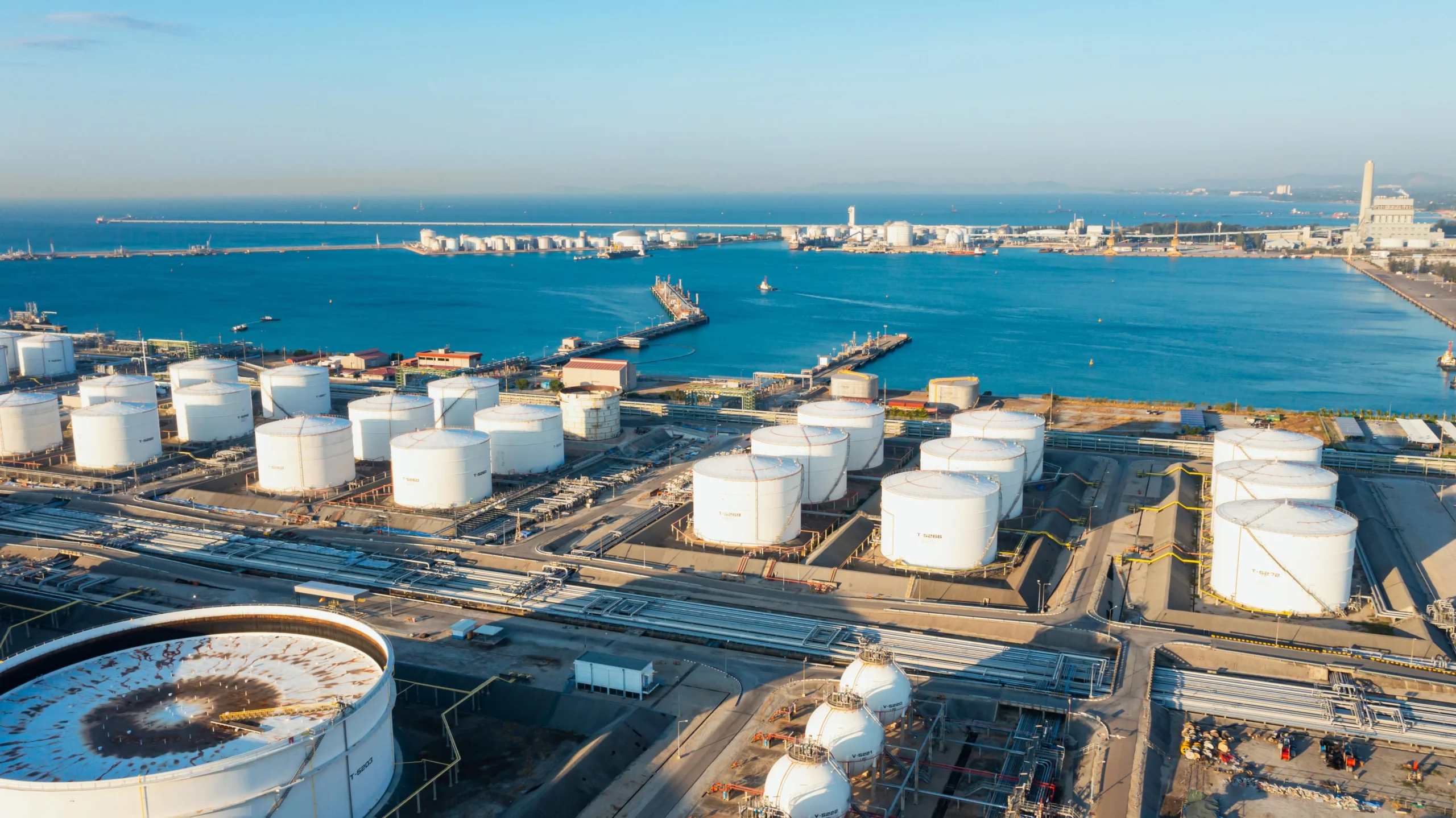
Today, environmental management in industrial facilities with hydrocarbon and chemical storage systems has evolved from being a mere regulatory requirement to a strategic factor for sustainability and competitiveness.
Spill and leak incidents, beyond their immediate impact on ecosystems and communities, represent significant operational losses, financial penalties, and deep damage to corporate reputation.
Preventing these events not only protects the environment but also ensures business continuity and strengthens stakeholder confidence.
To achieve this, integrating the risk-based approach of ISO 14001 with the technical requirements of API 653 can greatly benefit organizations, becoming a decisive tool to reduce the probability of spills and leaks, enhance corporate sustainability, and demonstrate a genuine commitment to environmental responsibility.
Regulatory framework: Convergence between ISO 14001 and API 653
Currently, industrial environmental management and asset integrity management share a common conceptual foundation: risk-based thinking. Far from being independent frameworks, ISO 14001 and API 653 naturally complement each other, offering organizations an integrated model that merges management, engineering, and sustainability.
ISO 14001, internationally recognized as the reference standard for Environmental Management Systems (EMS), establishes requirements to identify, control, and continuously improve an organization’s environmental aspects. It promotes a preventive approach, integrating environmental management into both business strategy and organizational culture.
Meanwhile, API 653, published by the American Petroleum Institute, is the technical standard governing the inspection, repair, alteration, and maintenance of aboveground storage tanks. Its purpose is to ensure the structural integrity of tanks and prevent failures that could lead to leaks or spills.
At first glance, both standards seem to operate on different planes, one focused on environmental risk management, the other on technical infrastructure management. However, their convergence point lies precisely in risk-based management. While ISO 14001 guides organizations to identify and prioritize significant environmental aspects and impacts, API 653 drives the identification and prioritization of structural risks that could compromise product containment.
Identification and assessment of environmental risks in storage systems
Identifying and assessing environmental risks is the cornerstone of any effective spill prevention strategy.
In storage systems, this stage represents the intersection between environmental management and integrity engineering, allowing the recognition of factors that could cause a loss of containment before it occurs.
Identification of environmental aspects and impacts
The starting point is to develop a detailed inventory of environmental aspects related to storage operations: emissions, waste generation, energy consumption, discharges, and, most importantly, the potential release of product into the environment. From there, the possible impacts are determined, such as soil contamination, water body pollution, air quality deterioration, or risks to wildlife and human health.
Risk evaluation: probability and severity
Once aspects and impacts are identified, they are evaluated by combining the probability of occurrence with the magnitude of potential damage.
This analysis, which may use risk matrices or quantitative methodologies, helps prioritize scenarios and allocate resources to the most critical areas.
For storage tanks, failure probability can be estimated based on variables such as tank age, measured corrosion rate, type of stored product, inspection frequency, and maintenance quality.
The severity of impact depends on the potentially released volume, terrain characteristics, proximity to water bodies or populated areas, and containment system response capacity.
Risk prioritization and control definition
The next step is to translate evaluation results into concrete operational decisions. Critical risks require immediate preventive and corrective actions, such as weld repairs, replacement of corroded components, or redesign of secondary drainage systems. Meanwhile, moderate risks are managed through operational controls within the Environmental Management System, incorporating procedures, monitoring, and personnel training.
Control and prevention strategies under an ISO 14001 system
Truly effective environmental management goes beyond risk identification. It requires transforming risks into actions that reduce their likelihood of occurrence. In storage systems, this means establishing control and prevention strategies that integrate ISO 14001 guidelines with API 653 technical criteria, ensuring that environmental management becomes an operational component, not just a documentation process.
Design and preventive maintenance of containment systems
The first level of control lies in the design and maintenance of primary and secondary containment systems.
Storage tanks, valves, fittings, and transfer lines form the first barrier against potential releases. The second barrier, composed of dikes, sumps, drains, and liners, ensures that any spill is confined within the facility.
ISO 14001 guides organizations to plan operational controls over processes that can generate significant environmental impacts.
In this sense, compliance with API 653 technical requirements, together with API 650 design practices and API 652 coating recommendations, creates a robust environmental prevention structure.
Periodic tank bottom inspections, ultrasonic thickness monitoring, and dike integrity verification are not merely maintenance tasks, they are preventive environmental actions.
Inspection and predictive maintenance programs
Risk-Based Inspection (RBI) planning becomes a powerful tool when integrated into the environmental management system.
Instead of inspecting all assets at the same frequency, the organization prioritizes tanks or components with the highest potential environmental impact, according to risk assessment results.
Operational procedures and emergency response
Operational control through procedures and emergency management is another fundamental pillar of environmental control.
ISO 14001 requires organizations to establish procedures and plans to prepare for and respond to situations that may generate significant impacts.
In facilities with storage tanks, this translates into specific plans for spill containment and mitigation, product recovery, and post-incident environmental restoration.
Moreover, Key Performance Indicators (KPIs) are essential for evaluating the effectiveness of prevention strategies and detecting deviations in time.
Organizational culture and personnel training
No environmental management system can succeed without an organizational culture aligned with prevention and integrity.
Operators, maintenance technicians, and supervisors are often the first to detect warning signs, and their ability to act depends on the level of environmental awareness cultivated within the organization.
Conclusions
Preventing spills and leaks in storage systems can no longer be considered solely a technical responsibility; it is a strategic imperative that requires integrating environmental management, asset engineering, and emerging technologies.
The risk-based approach, articulated through ISO 14001 and API 653, allows organizations to anticipate events, prioritize actions, and maximize the effectiveness of maintenance and containment programs.
Adopting this comprehensive strategy not only reduces environmental impacts and incident-related costs but also strengthens corporate reputation, promotes a culture of continuous improvement, and consolidates a standard of operational and environmental excellence.
References
- ISO 14001:2015. Environmental Management Systems – Requirements with Guidance for Use. International Organization for Standardization (ISO).
- API 653. Tank Inspection, Repair, Alteration, and Reconstruction. American Petroleum Institute.
- API 650. Welded Tanks for Oil Storage. American Petroleum Institute.
- API 652. Lining of Aboveground Petroleum Storage Tanks. American Petroleum Institute.
- ISO 9001:2015. Quality Management Systems – Requirements. International Organization for Standardization (ISO).
- Lugo, J., Toyo, M., Zavarce, T. Practical Guide to Developing a Risk-Based Inspection (RBI) Program. Inspenet.
This article was developed by specialist Juan Lugo Marín and published as part of the seventh edition of Inspenet Brief February 2026, dedicated to technical content in the energy and industrial sector.