
Table of Contents
- What is LOTO and its importance in industry?
- Types of hazardous energy in industrial equipment
- LOTO procedure for controlling hazardous energy
- LOTO within the Energy Control Program: foundation for operational safety
- Best practices for effective implementation
- Integration of LOTO into industrial safety culture
- Conclusions
- References
- Frequently Asked Questions (FAQs)
The control of hazardous energy is a critical requirement in any industrial intervention. During maintenance, inspection, or repair tasks, equipment can release energy unexpectedly if it is not properly isolated. In this context, the LOTO (Lockout–Tagout) system stands out as an essential practice to ensure safe working conditions, preventing serious and even fatal accidents.
Proper application of lockout and tagout, in accordance with OSHA 29 CFR 1910, allows achieving a verifiable Zero Energy State, where the equipment is completely de-energized and out of operation. More than a procedure, LOTO is part of a safety culture that protects personnel and ensures asset integrity.
What is LOTO and its importance in industry?
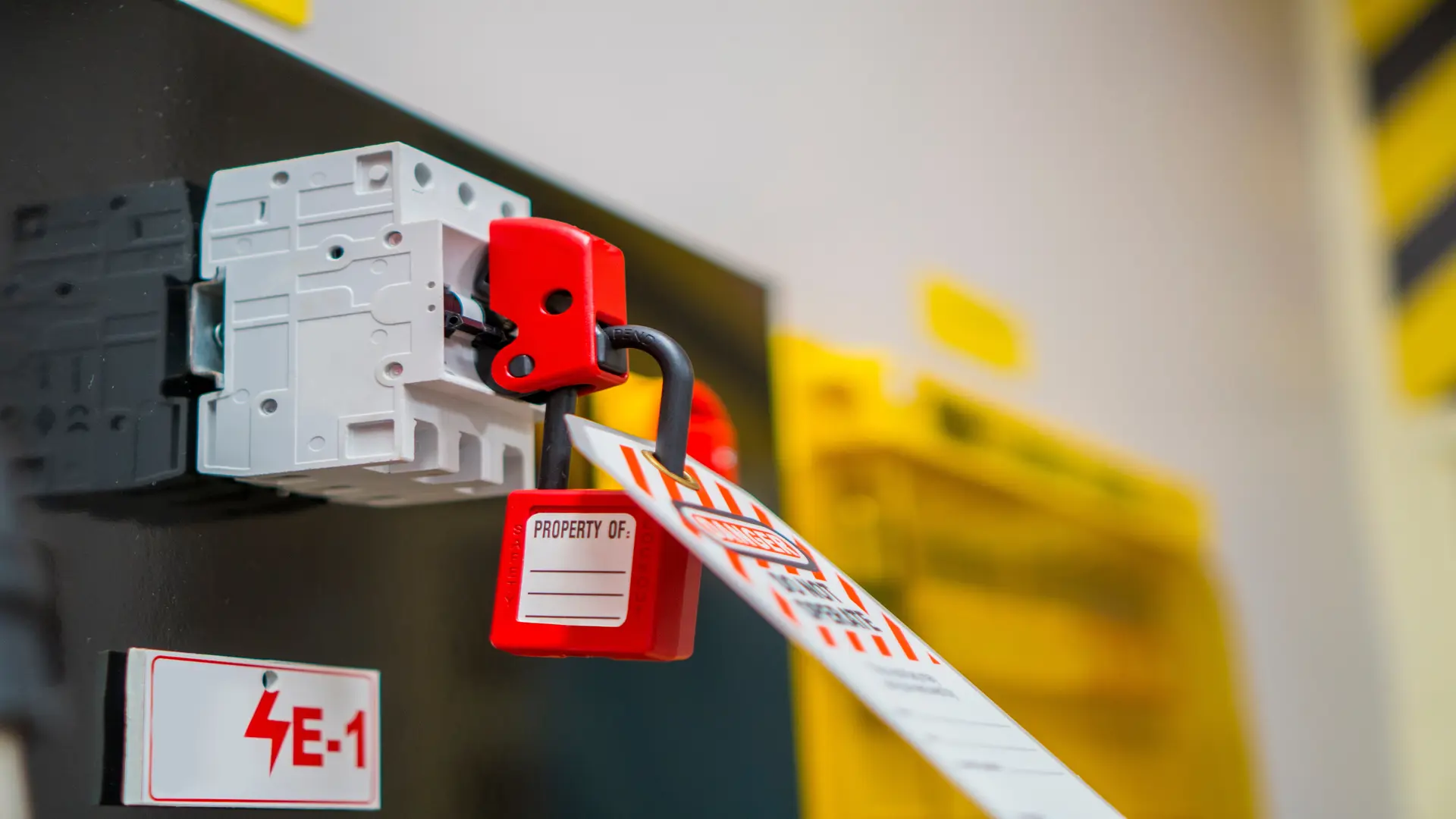
The LOTO system is a procedure designed to control hazardous energy through three key actions: isolation, locking, and verification. Its objective is to prevent accidental start-up of equipment or the release of energy during intervention work.
According to OSHA 29 CFR 1910, every organization must implement an Energy Control Program, ensuring that each energy source is identified and controlled through Energy-Isolating Devices. This guarantees that equipment cannot be energized while work is being performed.
The relevance of LOTO lies in the fact that industrial systems do not operate with a single energy source. Instead, they combine different types that may act simultaneously, increasing risk if not properly managed. Failure to control these energies can result in entrapment, electrical shocks, pressure release, or burns.
Types of hazardous energy in industrial equipment
To properly implement lockout and tagout, it is essential to identify all forms of energy present in the equipment. The most common include:
- Electrical energy, present in motors, panels, and transformers, represents one of the most critical risks. Its control requires lockable disconnect devices and compliance with complementary standards such as NFPA 70E.
- Mechanical energy is associated with moving or inertial components such as gears, pulleys, or flywheels. Even when equipment is stopped, stored energy may still generate hazardous movement.
- Hydraulic and pneumatic energy is also common in industrial systems, where accumulated pressure in lines or cylinders can be violently released if not properly discharged.
- Thermal energy is another relevant factor, especially in equipment such as furnaces, boilers, or heat exchangers, where high temperatures may remain even after shutdown.
- Finally, potential energy, generated by elevated elements, springs, or counterweights, can be released by gravity or tension, creating significant hazards.
LOTO procedure for controlling hazardous energy
An effective LOTO procedure follows a structured sequence that ensures safe isolation of equipment. This process is part of the Energy Control Program and must be applied consistently throughout the organization.
- The first step is preparation, where all hazardous energy sources and isolation points are identified. This stage is key to avoiding omissions.
- Next is notification, informing affected personnel that the equipment will be serviced and taken out of operation.
- Shutdown is performed using normal operating controls, reducing risks before isolation.
- Then comes isolation, disconnecting all energy sources using appropriate devices. This establishes the foundation for safe isolation.
- The next step is lockout and tagout, where each worker applies their own LOTO device, ensuring the equipment cannot be reactivated without authorization.
- Once the system is locked, residual energy release is carried out by eliminating pressure, electrical charges, or any stored energy.
- Finally, verification is performed to confirm that the equipment is in a zero energy state before starting any work.
The proper application of lockout and tagout (LOTO) procedures protects workers from the unexpected release of hazardous energy. In this safety video, the LOTO process is presented in six clear and practical steps. It also explains the importance of proper tagging and how to complete a tag correctly. Source: IHSA.ca – Work Safe for Life.

The LOTO process explained in six steps.
LOTO within the Energy Control Program: foundation for operational safety
Lockout and tagout (LOTO) is not an isolated procedure but an essential component of a structured Energy Control Program. In any industrial environment, this program forms the basis for safely managing hazardous energy, ensuring that equipment remains under controlled conditions during maintenance, inspection, or repair activities.
According to OSHA 29 CFR 1910.147, every organization must implement a formal program that establishes guidelines for energy isolation. In this context, LOTO acts as the operational tool that enables the execution of these guidelines through physical devices such as locks and tags, ensuring that energy cannot be released unexpectedly.
An effective energy control program includes several key elements: documented procedures for the use of LOTO devices, availability of appropriate lockout equipment, clear application policies, and periodic system reviews. These inspections, which must be conducted at least once a year, help verify the program’s effectiveness and ensure continuous compliance in the field.
Training and personnel competencies in the LOTO system
However, the most critical component of the program is not only technical but human. OSHA regulations establish that all workers must receive proper training to understand the purpose, scope, and correct application of the LOTO system. This means that each employee must not only know the procedures but also develop the skills necessary to apply, use, and safely remove energy control devices.
Training must be adapted to the level of responsibility of each worker. Those authorized to perform lockout must be able to identify hazardous energy sources, recognize their magnitude, and apply appropriate isolation methods. On the other hand, employees working in areas where LOTO is implemented must be instructed to understand its importance and, especially, not to attempt to restart or energize equipment that is locked or tagged out.
Additionally, training is not a one-time event but a continuous process. OSHA requires workers to receive periodic training, at least once a year, to reinforce knowledge and ensure proper application of procedures. Likewise, any changes in energy control methods or the introduction of new equipment require immediate training updates to ensure personnel are prepared to operate under new conditions.
In this sense, integrating lockout and tagout into an energy control program not only ensures regulatory compliance but also strengthens the organizational safety culture. When the system is applied consistently, with clear procedures, proper equipment, and trained personnel, the risk of accidents is significantly reduced and the reliability of industrial operations is improved.
Ultimately, LOTO is much more than a safety practice: it is a key element within a comprehensive risk management strategy, where operational discipline, continuous training, and regulatory compliance converge to protect both people and assets.
Best practices for effective implementation
Beyond regulatory compliance, the effectiveness of the LOTO system depends on its proper implementation in daily operations. This involves continuous training, standardization of procedures, and active supervision.
A key aspect is operational discipline, ensuring that no step in the procedure is omitted. Likewise, leadership involvement is essential to reinforce the safety culture and ensure that the system is not perceived as an administrative requirement but as a real protective tool.
The integration of LOTO into asset integrity management programs allows alignment between safety and operational reliability, reducing incidents and improving overall plant performance.
Integration of LOTO into industrial safety culture
The effectiveness of the LOTO system depends not only on the existence of documented procedures but on its real integration into the organizational culture. When lockout and tagout become a systematic practice, aligned with operational discipline and field leadership, the management of hazardous energy shifts from reactive to preventive.
More mature organizations incorporate LOTO into their integrity and reliability management systems, linking it to performance indicators, training programs, and operational audits. This integration ensures that compliance with OSHA 29 CFR 1910 is not a one-time event but a sustained standard over time.
Furthermore, process digitalization, the use of electronic work permits, and intervention traceability strengthen system implementation, reducing human error and improving visibility of energy control across operations.
Conclusions
The LOTO system represents one of the most effective barriers to prevent accidents associated with the release of hazardous energy in industrial environments. Its proper implementation not only ensures safe intervention conditions but also contributes to operational reliability and the reduction of incident-related losses. More than a procedure, lockout and tagout represent a key element within the safety culture.
Integrating it effectively into daily operations not only protects workers but also strengthens operational continuity and the safe management of industrial assets.
Adopting lockout and tagout as an integrated practice within the organizational culture, aligned with OSHA 29 CFR 1910, allows companies to evolve from regulatory compliance toward an operational excellence approach, where safety is an inherent value in every process.
References
- Occupational Safety and Health Administration. (2016). Controlling hazardous energy: Lockout/tagout (OSHA Standard 29 CFR 1910.147). U.S. Department of Labor.
- National Fire Protection Association. (2024). NFPA 70E: Standard for electrical safety in the workplace. NFPA.
- American Society of Safety Professionals. (2024). ANSI/ASSP Z244.1-2024: The control of hazardous energy—Lockout, tagout, and alternative methods. ANSI.
Frequently Asked Questions (FAQs)
What is LOTO and why is it critical in industry?
LOTO is a safety procedure that controls hazardous energy through isolation, locking, and verification, preventing accidents during maintenance.
What does OSHA 29 CFR 1910 establish about LOTO?
This regulation requires the implementation of an energy control program that ensures the safe isolation of equipment before any intervention.
What types of hazardous energy does LOTO control?
It controls electrical, mechanical, hydraulic, pneumatic, thermal, and potential energy, all capable of causing injuries if not properly isolated.
What is the objective of the zero energy state?
To ensure that equipment is completely de-energized, with no residual energy, before starting work, guaranteeing safe intervention.