Corrosion is an electrochemical process that degrades metallic materials and affects the performance of equipment and structures in the energy industry. Understanding its mechanisms, kinetics, and environmental variables is essential for material selection and designing mitigation measures.
This field integrates chemistry, metallurgy, mechanical integrity, and operations. Globally, corrosion generates significant costs and operational risks, driving technologies such as monitoring, coatings, inhibitors, and alloy selection in the U.S., Europe, and LATAM.
Main topics
This section gathers technical content for professionals requiring a comprehensive view of material degradation and performance.
Corrosion represents one of the major technical and economic challenges in the energy sector. Its complex behavior and dependence on operational conditions require specialized knowledge.
Corrosion under insulation is a critical hidden risk in industrial assets. At Inspenet, we analyze advanced inspection technologies to detect and manage CUI.
AC interference induced by high-voltage power lines compromises the safety and integrity of cathodically protected pipelines. The use of decouplers allows AC to be…
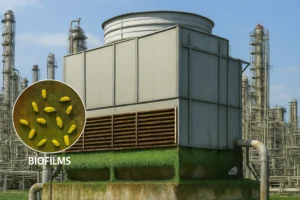
The combination of pH variations, dissolved gases, and microbiological activity in cooling systems generates corrosion and deposits that affect mechanical integrity and thermal efficiency.
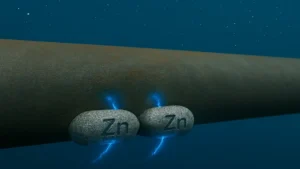
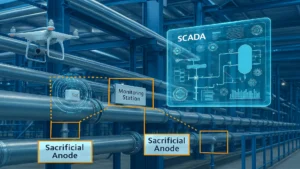
Sacrificial anodes are metal components designed to corrode in a controlled manner, transferring protective current to the cathodic structure and preserving its integrity against…
Atmospheric corrosion in oil pipelines, gas pipelines, tanks, and offshore platforms is a persistent problem that causes considerable economic losses and operational risks in…