
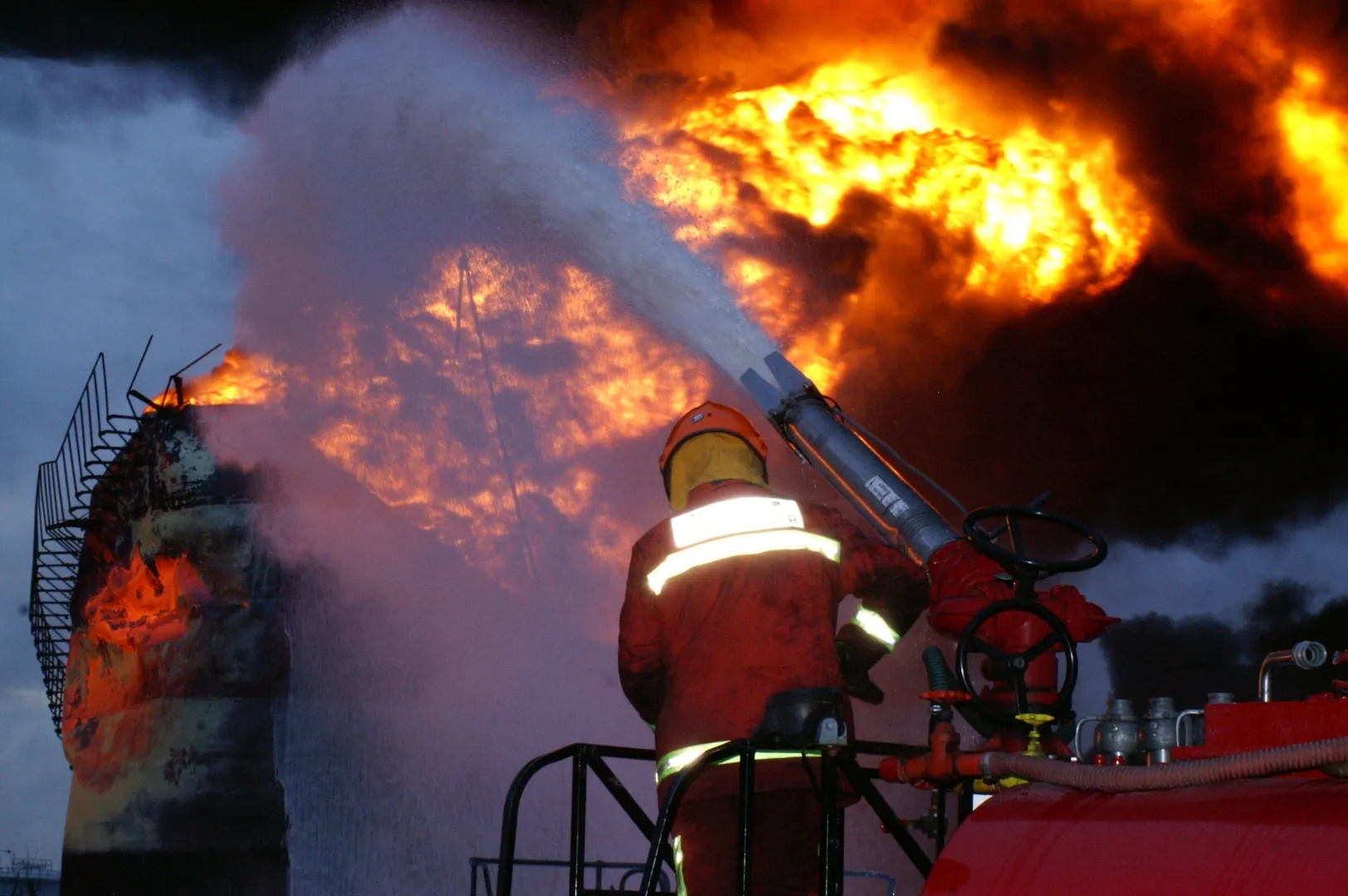
Pipeline explosion during pigging cleaning procedures
The explosion occurred in a Petróleos Mexicanos (Pemex) pipeline located in Loma Larga, municipality of El Barrio de la Soledad, in the Isthmus of Tehuantepec region, Oaxaca. The incident occurred while performing ordinary cleaning and internal maintenance of pipelines.
According to the official statement of the Government of Oaxaca, the event would have started with a primary explosion, followed by a fire at the site where a pumping station is located. This type of facilities are critical to maintain pressure and flow in hydrocarbon transportation systems.
Immediate response of the Fire Department
The Oaxaca Fire Department immediately responded to the site following the report of the fire. The State Coordination of Civil Protection and Risk Management (CEPCyGR) activated emergency protocols for fire control and risk mitigation.
Actions included perimeter securing, structural damage assessment and verification of possible secondary risks associated with residual pressure or flammable vapors.
The explosion in a Pemex pipeline in Oaxaca occurred during an ordinary internal cleaning process. Beyond the human impact, the event is an opportunity to open the technical debate on risk management in the maintenance of hydrocarbon pipelines and pumping stations.
Risks in internal cleaning of pipelines
The most relevant technical fact of the incident is that it occurred during an ordinary internal cleaning process. These activities usually involve procedures such as pigging, inerting or controlled depressurization.
In pipelines carrying hydrocarbons, even small concentrations of flammable vapors can generate explosive atmospheres if ventilation, residual energy removal or the presence of ignition sources are not adequately controlled.
The re-pumping stations add an additional level of risk due to the existence of electrical equipment, pressurization systems and possible accumulations of product in secondary lines.
Pumping stations under technical analysis
These stations are strategic nodes in Pemex’s transportation network, as they allow us to maintain flow and pressure over long distances. Any event at these facilities can compromise operational continuity.
From the technical point of view, it will be key to determine if there was a pressure build-up, presence of residual gas, failure in lockout/tagout (LOTO) procedures or any anomaly in the industrial safety protocol.
The CEPCyGR is in permanent coordination with the corresponding authorities to follow up on the case, while investigations are being carried out to clarify the root causes of the event.
Technical lessons for the industry
The explosion in the Pemex pipeline in Oaxaca is not only an unfortunate event; it is a technical reminder that maintenance in pressurized systems with hydrocarbons is one of the phases with the highest operational risk.
Industrial reliability is not only measured in availability, but in the ability to execute interventions without compromising human life and system integrity. Root cause analysis will be decisive in establishing whether it was a procedural failure, an unexpected residual pressure event or a combination of human and technical factors.
Source: https://www.oaxaca.gob.mx
Photo: Shutterstock